

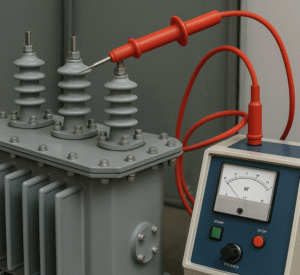
Starting a business in the dielectric testing sector is a practical and forward-looking venture. Dielectric testing — sometimes called high-potential or “hipot” testing — is a crucial service in many industries, as it verifies that insulation in electrical components, cables, and equipment can withstand voltages without breaking down. Wikipedia+2Market Report Analytics+2 As global infrastructures expand, electrification accelerates, and safety regulations tighten, the demand for professional testing services is growing. Market Report Analytics+2Market Report Analytics+2 In this article I’ll walk through the major steps to start a dielectric testing business — from planning through launch and day-to-day operation.
Establishing the Foundation
Entering the dielectric testing business means you’ll be offering a service that many manufacturers, utilities, and equipment owners must use. The first major step is market research and niche definition. The global market for dielectric strength testing services is growing robustly, driven by increased adoption of high-voltage equipment in sectors like renewables, EVs, and industrial manufacturing. Market Report Analytics+1 Understanding where you can specialize — for example, cable insulation testing for utilities, or dielectric breakdown testing for electronics manufacturing — gives you focus.
Next, build a business plan. Define your offering: what types of tests you will carry out (AC/DC dielectric withstand, impulse testing, insulation resistance, etc.). You’ll need to identify target clients, pricing strategy, equipment needs, staffing, and marketing. Also include a realistic time-to-break-even and projected growth, given the positive trend in the market (for example, the dielectric testing segment is projected to expand markedly over the coming years). Market Report Analytics+1 You’ll also want to consider regulatory and accreditation requirements: many clients will expect certification or alignment with standards like IEC, IEEE, UL, etc.
Setting Up Operations
With the plan in place, you’ll move to facility setup and equipment acquisition. Dielectric testing often requires high-voltage test sets, insulation test instruments, safety enclosures, monitoring equipment for leakage current, and proper grounding and isolation infrastructure. A report on dielectric testing explains that reliability, accuracy and test-equipment selection are essential for service credibility. TimesTech Choose whether you will be mobile (on-site testing) or a dedicated lab, or both. On-site work requires portable or transportable equipment; a lab may demand a dedicated high-voltage chamber with strong safety controls.
You’ll also need to hire or contract skilled technicians who understand insulation behavior, high-voltage safety, test equipment setup, and data interpretation. Your team must be trained in both the technical and safety aspects. Don’t overlook administrative needs: certification documentation, report generation, client communication, job scheduling and quality management systems are all important.
Compliance, Standards and Safety
In this business, safety and compliance are non‐negotiable. Clients depend on you delivering reliable, safe testing. The testing process itself involves applying high voltages and measuring leakage or breakdown — the stakes are high. According to engineering guidance, dielectric withstand (hipot) testing must follow well-defined procedures and leakage thresholds. Wikipedia+1 You’ll need to comply with relevant national and international standards (such as IEC testing standards, UL/CSA for North America, IEEE for electrical equipment). Establishing your business as trustworthy and certified by recognized institutions will help you attract clients.
Equally, ensure that your own operations are safe: high-voltage test rooms must meet electrical safety code requirements, personnel must have training in high-voltage safety, proper PPE and isolation must be provided, and contingency procedures must be in place.
Marketing and Business Development
Your service is highly technical, so your marketing must speak to decision-makers in manufacturing plants, utilities, and equipment suppliers. Develop a strong value proposition: you reduce risk of electrical failure, you help with regulatory compliance, you extend equipment life, you provide fast turnaround and clear reports. Use case studies or testimonials once you have clients.
Since the dielectric testing services market is forecast to grow — driven by electrification, renewable energy deployment, and stricter testing/regulatory regimes — you can position your business as partnering for reliability and compliance. Market Report Analytics+1 Networking with industry associations, trade shows, standards bodies, and safety/regulatory forums helps build credibility. Generate white papers or blog content (such as explaining common insulation failure modes, why dielectric testing matters) so you build technical authority.
Pricing, Service Delivery and Differentiation
Decide how you’ll price your services: hourly, per-test, or fixed contract for multiple assets. Consider offering bundled service packages (for example, periodic inspection of high-voltage cables plus report and remedial recommendations). Make sure your pricing covers equipment amortisation, technician time, reporting, travel (if on-site), consumables, and overhead.
Focus on quality of delivery: clear, professional reports with actionable insights; fast turnaround; strong safety record. That will distinguish you in a market where many clients value reliability and certification. To differentiate further, you might invest in advanced capabilities: e.g., portable dielectric testers for field work, or remote monitoring services with IoT/data analytics to track insulation condition over time. The market trends indicate growing interest in predictive maintenance and advanced analytics for dielectric testing. 360iResearch
Scaling the Business
Once you’ve established a foothold, scaling your dielectric testing business means expanding service offerings, geographic coverage, client base, and possibly acquiring equipment to serve higher voltage or more complex systems. You might add new test types (impulse testing, partial discharge measurement, thermal-mapping of insulation) or branch into emerging industries (such as EV battery packs, renewable energy systems, high-voltage transmission). The dielectric testing services market is large and still growing, offering multiple avenues of expansion. Market Report Analytics+1 Consider strategic partnerships: with equipment manufacturers, test labs, or utilities. Also track new regulations or standards that compel more frequent or sophisticated testing — those become growth drivers.
Operational Best Practices
To run a successful business you’ll need to emphasise ongoing training, equipment calibration, and quality assurance. Maintain calibration logs for all test equipment. Provide continuous training for your technicians — insulation materials and equipment age, standards evolve, and new test methods emerge. Ensure that your reports are clear and usable by clients — include findings, implications, recommendations, and maybe condition trending. Manage client relationships proactively, ensure scheduling is clear, and provide value beyond just test execution (for example, advising on insulation maintenance or failure risk mitigation).
Manage your financials carefully: test equipment is a significant capital cost, safety infrastructure is non-trivial, travel costs (for on-site testing) add up, and technicians’ time must be profitable. As you scale, consider developing standard operating procedures (SOPs), documentation, and maybe software to track jobs, invoices, equipment status, and client history.
Conclusion
Launching a dielectric testing business is a compelling opportunity in today’s industrial and electrical safety landscape. With strong demand, proven market growth, and wide application across industries, the fundamentals are solid. As you build your business you will benefit from clarity of niche, investment in the right equipment and talent, stringent adherence to safety and standards, a credible value proposition to clients, and operational excellence in service delivery. By doing so you position yourself not just as a testing vendor but as a trusted partner in reliability, compliance and electrical safety. The journey takes planning, discipline and technical competence — but the payoff can be a thriving business in an important and growing field. 🚀