

How to Launch a Dielectric Testing Business Successfully 😊

Business News for dielectric testing

Starting a business in the dielectric testing sector is a practical and forward-looking venture. Dielectric testing — sometimes called high-potential or “hipot” testing — is a crucial service in many industries, as it verifies that insulation in electrical components, cables, and equipment can withstand voltages without breaking down. Wikipedia+2Market Report Analytics+2 As global infrastructures expand, electrification accelerates, and safety regulations tighten, the demand for professional testing services is growing. Market Report Analytics+2Market Report Analytics+2 In this article I’ll walk through the major steps to start a dielectric testing business — from planning through launch and day-to-day operation.

Establishing the Foundation


Entering the dielectric testing business means you’ll be offering a service that many manufacturers, utilities, and equipment owners must use. The first major step is market research and niche definition. The global market for dielectric strength testing services is growing robustly, driven by increased adoption of high-voltage equipment in sectors like renewables, EVs, and industrial manufacturing. Market Report Analytics+1 Understanding where you can specialize — for example, cable insulation testing for utilities, or dielectric breakdown testing for electronics manufacturing — gives you focus.

Next, build a business plan. Define your offering: what types of tests you will carry out (AC/DC dielectric withstand, impulse testing, insulation resistance, etc.). You’ll need to identify target clients, pricing strategy, equipment needs, staffing, and marketing. Also include a realistic time-to-break-even and projected growth, given the positive trend in the market (for example, the dielectric testing segment is projected to expand markedly over the coming years). Market Report Analytics+1 You’ll also want to consider regulatory and accreditation requirements: many clients will expect certification or alignment with standards like IEC, IEEE, UL, etc.

Setting Up Operations


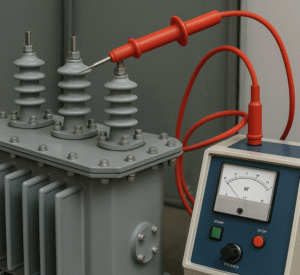
With the plan in place, you’ll move to facility setup and equipment acquisition. Dielectric testing often requires high-voltage test sets, insulation test instruments, safety enclosures, monitoring equipment for leakage current, and proper grounding and isolation infrastructure. A report on dielectric testing explains that reliability, accuracy and test-equipment selection are essential for service credibility. TimesTech Choose whether you will be mobile (on-site testing) or a dedicated lab, or both. On-site work requires portable or transportable equipment; a lab may demand a dedicated high-voltage chamber with strong safety controls.

You’ll also need to hire or contract skilled technicians who understand insulation behavior, high-voltage safety, test equipment setup, and data interpretation. Your team must be trained in both the technical and safety aspects. Don’t overlook administrative needs: certification documentation, report generation, client communication, job scheduling and quality management systems are all important.

Compliance, Standards and Safety


In this business, safety and compliance are non‐negotiable. Clients depend on you delivering reliable, safe testing. The testing process itself involves applying high voltages and measuring leakage or breakdown — the stakes are high. According to engineering guidance, dielectric withstand (hipot) testing must follow well-defined procedures and leakage thresholds. Wikipedia+1 You’ll need to comply with relevant national and international standards (such as IEC testing standards, UL/CSA for North America, IEEE for electrical equipment). Establishing your business as trustworthy and certified by recognized institutions will help you attract clients.

Equally, ensure that your own operations are safe: high-voltage test rooms must meet electrical safety code requirements, personnel must have training in high-voltage safety, proper PPE and isolation must be provided, and contingency procedures must be in place.

Marketing and Business Development


Your service is highly technical, so your marketing must speak to decision-makers in manufacturing plants, utilities, and equipment suppliers. Develop a strong value proposition: you reduce risk of electrical failure, you help with regulatory compliance, you extend equipment life, you provide fast turnaround and clear reports. Use case studies or testimonials once you have clients.

Since the dielectric testing services market is forecast to grow — driven by electrification, renewable energy deployment, and stricter testing/regulatory regimes — you can position your business as partnering for reliability and compliance. Market Report Analytics+1 Networking with industry associations, trade shows, standards bodies, and safety/regulatory forums helps build credibility. Generate white papers or blog content (such as explaining common insulation failure modes, why dielectric testing matters) so you build technical authority.

Pricing, Service Delivery and Differentiation


Decide how you’ll price your services: hourly, per-test, or fixed contract for multiple assets. Consider offering bundled service packages (for example, periodic inspection of high-voltage cables plus report and remedial recommendations). Make sure your pricing covers equipment amortisation, technician time, reporting, travel (if on-site), consumables, and overhead.

Focus on quality of delivery: clear, professional reports with actionable insights; fast turnaround; strong safety record. That will distinguish you in a market where many clients value reliability and certification. To differentiate further, you might invest in advanced capabilities: e.g., portable dielectric testers for field work, or remote monitoring services with IoT/data analytics to track insulation condition over time. The market trends indicate growing interest in predictive maintenance and advanced analytics for dielectric testing. 360iResearch

Scaling the Business


Once you’ve established a foothold, scaling your dielectric testing business means expanding service offerings, geographic coverage, client base, and possibly acquiring equipment to serve higher voltage or more complex systems. You might add new test types (impulse testing, partial discharge measurement, thermal-mapping of insulation) or branch into emerging industries (such as EV battery packs, renewable energy systems, high-voltage transmission). The dielectric testing services market is large and still growing, offering multiple avenues of expansion. Market Report Analytics+1 Consider strategic partnerships: with equipment manufacturers, test labs, or utilities. Also track new regulations or standards that compel more frequent or sophisticated testing — those become growth drivers.

Operational Best Practices


To run a successful business you’ll need to emphasise ongoing training, equipment calibration, and quality assurance. Maintain calibration logs for all test equipment. Provide continuous training for your technicians — insulation materials and equipment age, standards evolve, and new test methods emerge. Ensure that your reports are clear and usable by clients — include findings, implications, recommendations, and maybe condition trending. Manage client relationships proactively, ensure scheduling is clear, and provide value beyond just test execution (for example, advising on insulation maintenance or failure risk mitigation).

Manage your financials carefully: test equipment is a significant capital cost, safety infrastructure is non-trivial, travel costs (for on-site testing) add up, and technicians’ time must be profitable. As you scale, consider developing standard operating procedures (SOPs), documentation, and maybe software to track jobs, invoices, equipment status, and client history.

Conclusion


Launching a dielectric testing business is a compelling opportunity in today’s industrial and electrical safety landscape. With strong demand, proven market growth, and wide application across industries, the fundamentals are solid. As you build your business you will benefit from clarity of niche, investment in the right equipment and talent, stringent adherence to safety and standards, a credible value proposition to clients, and operational excellence in service delivery. By doing so you position yourself not just as a testing vendor but as a trusted partner in reliability, compliance and electrical safety. The journey takes planning, discipline and technical competence — but the payoff can be a thriving business in an important and growing field. 🚀

Launching a Dimensional Control (DimCon) Surveying Business: Your Blueprint to Precision and Profit

Business News for DimCon Surveying

The world of construction, engineering, and large-scale industrial projects is evolving at lightning speed. As structures become more complex and clients demand ultra-precise measurements, the need for accurate, reliable dimensional control surveying services—DimCon—is skyrocketing. If you’re considering starting your own DimCon surveying business, you’re tapping into a lucrative niche that combines technical expertise with the stability of industrial and construction markets. In this article, we’ll guide you through the essential steps to establish a successful DimCon surveying enterprise—from market research to operations, equipment, and beyond. Let’s dive into how you can build a business that’s as precise as the measurements you’ll be offering. 😊

Understanding the DimCon Surveying Industry

Dimensional Control Surveying (DimCon) specializes in providing highly accurate measurements and alignment checks for machinery, structural components, and even large assemblies like ships or aerospace structures. Accuracy to fractions of a millimeter can be crucial—meaning mistakes can be costly. As a result, clients in industries such as petrochemical, power generation, manufacturing, and construction rely heavily on these services to avoid downtime, ensure safety, and maintain quality.

Before you invest in equipment or marketing, it’s critical to understand the demand and competitive landscape in your area. Dive into trade publications, industry reports, and recent project trends. A recent article from Business News Daily highlights how the demand for precision measurement services has grown significantly in infrastructure and renewable energy sectors—a promising signal for entrepreneurs in the space. Business News Daily article provides valuable insights into how similar service-based businesses are adapting to modern technological demands. By keeping your ear to the ground, you can anticipate emerging opportunities and position yourself ahead of competitors.

Conducting Market Research and Identifying Your Niche

In many parts of the world, DimCon surveying remains a specialized but expanding niche. Your first task is to identify local and regional market needs. Attend industry conferences, webinars, and trade shows to meet potential clients and understand their pain points.

Consider offering specialized services such as laser scanning, 3D modeling, or retrofitting surveys—areas where higher precision can command premium pricing. A solid niche strategy often helps in differentiating your business and securing contracts that others might overlook. For example, if you notice that most regional providers focus on building surveys, targeting offshore or mining equipment alignment could give you an edge.

You’ll also want to analyze what competitors are offering, what they charge, and how they market themselves. Look at the size and scope of their projects, their client base, and the equipment they employ. This will give you an idea of your potential service offerings and price ranges. Additionally, check out more generalized business coverage such as Forbes Business News to see how industry leaders are innovating in adjacent service industries. Forbes Business News will help you stay informed about broader business strategy trends that can inform your approach.

Legal Structure, Licensing, and Insurance

Once you’ve validated your market, the next step is laying the legal and administrative foundation of your business. Decide whether you’ll form an LLC, S corporation, sole proprietorship, or another legal structure. Consult with a business attorney or accountant to determine what structure offers you the most protection and tax advantages given your situation.

DimCon surveying involves access to industrial sites, heavy machinery, and potentially hazardous environments. Therefore, liability insurance is non-negotiable. You’ll need general liability, professional liability (errors and omissions), and possibly workers’ compensation if you plan to employ staff. Confirm whether specific licensure or bonding is required in your jurisdiction, particularly if you’re working in regulated industries or government projects.

Acquiring Equipment and Technical Expertise

DimCon surveying relies on high-precision equipment: total stations, laser trackers, coordinate measuring machines (CMMs), 3D laser scanners, and specialized software for data analysis and 3D modeling. While the cost of quality equipment can be significant, investing in reliable tools will determine the accuracy of your offerings and client trust.

Consider starting with a core set of versatile tools and expanding as your business grows. For instance, you might begin with a high-accuracy total station and supplement with portable laser scanners later. Many equipment manufacturers offer training and certification programs, which can enhance your credibility when pitching to clients. Training ensures you and your team understand calibration, data collection, and safety procedures—essential for delivering professional-level services.

You might also explore renting or leasing options when starting out to manage upfront costs. Over time, as you build a client base and cash flow stabilizes, gradually purchase the most used and essential tools. Additionally, keep abreast of technological advances. A recent Wall Street Journal article spotlighted how automation and digital transformation are reshaping professional service firms. Wall Street Journal business tech  underscores that staying current will help you differentiate and deliver enhanced value.

Building Your Team and Developing Capabilities

In the early stages, you may begin as a one-person operation, especially if you bring surveying expertise yourself. However, as projects scale or diversify, assembling a skilled team becomes important. Look for employees or subcontractors with experience in geospatial data, CAD and BIM modeling, and field measurement techniques.

Cross-training team members helps ensure service continuity and quality control. For instance, if one client demands rapid turnaround or an unexpected re-survey, having multiple team members capable of performing at high precision saves both time and credibility. Creating standardized workflows, calibration schedules, and data quality checks will help maintain consistency as you expand.

Marketing Your DimCon Surveying Business

Effective marketing in a specialized technical field combines network building, digital presence, and thought leadership:

  • Networking: Establish connections with engineering firms, general contractors, architectural firms, and industrial maintenance providers. Attend sector-specific events in construction, manufacturing, maritime, and energy.

  • Digital Presence: Design a professional website showcasing case studies, precision capabilities, equipment listings, client testimonials, and contact information. Emphasize your commitment to accuracy, safety, and reliability.

  • Content Marketing: Publish blog posts, white papers, and videos explaining the importance of precise dimensional control, project success stories, and how dimensional inaccuracies can cost clients time and money.

  • SEO and Paid Ads: Optimize your website for search terms like “dimensional control surveying,” “laser tracker services,” or “industrial alignment surveys.” Consider investing in PPC campaigns targeting industries in your region.

  • Credibility Signals: Pursue any relevant certifications (e.g., ISO standards), industry association memberships, or case study rights from major clients to bolster your reputation.

Looking to the business pages of major publications for inspiration, you might turn to The New York Times – Business Section to observe how successful firms frame and share their achievements. NYT Business offers examples of how strategic storytelling can enhance brand positioning.

Pricing, Project Management, and Scaling

Pricing in DimCon surveying can vary widely depending on project complexity, location, equipment used, and data deliverables. Typical pricing models include:

  • Hourly or Daily Rates: Ideal for short field jobs.

  • Per-Project Flat Rates: For well-defined scopes, often used for industrial alignments or single-site surveys.

  • A la Carte Add-Ons: Like 3D models, as-built drawings, or repeat visits.

Ensure your rates consider overhead, travel, data processing time, and margin. As you win clients, develop efficient project management systems for scheduling, billing, reporting, quality assurance, and client communication.

Scaling your business may involve opening regional offices, purchasing additional equipment, or expanding into related sectors like building information modeling (BIM) integration or drone-based surveys. Keep an eye on emerging technologies such as automated total stations linked to cloud-based platforms—these could boost productivity and provide service differentiation.

Conclusion

Starting a DimCon surveying business marries the art of precision measurement with the mechanics of entrepreneurship. Succeeding in this niche requires understanding market needs, investing in equipment and expertise, building a reputation rooted in accuracy, and executing savvy marketing and operational strategies. By carefully planning your legal structure, pricing, team, and tech investments, you position yourself to deliver immense value to industrial and construction clients. With the right approach, your business can grow from a modest operation to a trusted regional or even national provider—one millimeter at a time.