

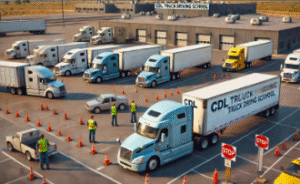
Launching a Commercial Driver’s License (CDL) truck driving school can be a rewarding and lucrative venture—both economically and personally. As the backbone of freight and logistics, America’s trucking industry continuously needs well-trained, skilled drivers. If you’re passionate about helping others launch a career and want to build a business with real-world positives, this may be your ideal path.
In this guide, we’ll cover every step of building your CDL driving school—from market research and licensing requirements to curriculum design, marketing strategies, and tips for long-term success. Whether you’re new to business or have experience in transportation or education, this article will guide you through the road ahead. Let’s hit the highway! 🛣️
1. Understand the Industry & Define Your Vision
Before diving in, step back and assess the market. Ask yourself:
-
What’s the demand for CDL training in your area? Research labor statistics—the U.S. Bureau of Labor Statistics notes strong demand for truck drivers now and into the future. Hyperlink: [Bureau of Labor Statistics – Heavy and Tractor‑Trailer Truck Drivers][1]
-
Who are your competitors? Visit existing schools, check their offerings, pricing, and reviews.
-
What niche can you fill? Will you specialize in Class A training, refresher courses, or endorsements like Hazmat?
Define your mission and vision:
-
Mission example: “To empower local residents with the training, skills, and confidence to start a successful trucking career.”
-
Vision example: “Be the region’s trusted CDL school—delivering top-quality training and job placement.”
Emphasizing your values—safety, excellence, and employability—will guide all choices ahead. ✨
2. Legal Requirements & Licensing
Running a CDL school involves regulatory compliance—don’t skip this!
Federal Requirements
-
The Federal Motor Carrier Safety Administration (FMCSA) oversees many standards and requires schools to maintain records, instructor training credentials, and equipment documentation. → [FMCSA – CDL School Regulations][2]
State Requirements
Licensing requirements vary by state. For instance, Oklahoma may require:
-
A school license from the Washington Department of Public Safety (ODPS)
-
Approved instructors with valid training credentials
-
Regular vehicle inspections and maintenance documentation
Contact your state’s Department of Motor Vehicles or Department of Public Safety to:
-
Obtain the required application forms
-
Understand fees and renewal cycles
-
Learn about instructor standards and vehicle requirements
(Example for Washington: [Washington DPS CDL School Info][3])
Insurance & Safety Compliance
-
Liability insurance is essential—cover student accidents, vehicle damage, and premises liability.
-
Install safety protocols: Damage prevention, first aid kits, emergency response plans, and regular vehicle maintenance logs.
-
Develop a Student Accident and Emergency Plan with clear steps—for the drivers and staff to follow in case of accident or medical emergency.
3. Secure Facilities & Vehicles
Your school needs both classroom space and training vehicles:
Facilities
-
Classroom: Space for lectures, occupant capacity per fire code, with amenities (projector, seating, restrooms).
-
Yard/Test Drive Area: Secure lot for pre-trip inspection practice and on-site maneuver training.
-
Office: Customer service area, admin desks, record keeping.
Location counts. Choose somewhere accessible for students, with enough parking and drive-testing area. Consider leasing near a trucking corridor or industrial area to reinforce branding and accessibility.
Vehicles & Equipment
-
At least one or two Class A tractor-trailer rigs, preferably late-model and reliable.
-
Install instructional aids: cameras for instructor oversight during practice drives, safety-grade lighting, mirrors, etc.
-
Maintenance plan: Set a schedule for oil changes, brake inspections, tire rotations.
-
Tools for classroom: Textbooks, simulators (optional but helpful), whiteboards, training materials from authoritative providers.
4. Craft a Strong Curriculum
Your training program should meet both state requirements and real industry needs:
Curriculum Components
-
Classroom Instruction
-
CDL general knowledge (air brakes, combination vehicles, hazardous materials).
-
State-specific rules and regulations.
-
Hours required by law + optional prep sessions.
-
-
Pre-trip Inspections
-
Step-by-step walkthroughs of functions to check before a trip.
-
Practice both classroom demonstration and hands-on.
-
-
Driving Lessons
-
Around-the-yard handling: backing, turns, coupling/uncoupling.
-
On-road training on local roads, highways, exit ramps.
-
-
Safety & Compliance Training
-
Hours-of-service (Logbook rules).
-
Basic vehicle maintenance understanding.
-
-
Job-Ready Coaching
-
Resume prep, interview practice, employer expectations.
-
Connections with local trucking fleets for referrals.
-
Outline your schedule (e.g., 160 hours total: 40 classroom, 120 driving). Offer flexible scheduling (full-time vs. part-time) to draw working adults. Consider mastery-based progression—students move forward when ready, not just by seat time.
5. Hire & Train Qualified Instructors
Your instructors are the heart of your school. Hire wisely.
Instructor Qualifications
-
Valid CDL with proper endorsements.
-
Certified as CDL instructor per state requirements (some states offer instructor training programs).
-
Strong communication skills and patience.
Instructor Training
-
Provide “train-the-trainer” sessions on how to teach effectively.
-
Incorporate adult education techniques: hands-on demos, positive reinforcement, constructive feedback.
-
Safety protocols (how to react during inclement weather or emergency).
Retain instructors by offering fair compensation and ongoing professional development.
6. Develop a Business Plan & Financing Strategy
Your business needs a solid foundation—plan carefully:
Business Plan Essentials
-
Executive Summary: Mission, services, vision
-
Market Analysis: Demand data, competitor analysis, pricing model
-
Operations Plan: Facility location, equipment needs, staffing
-
Marketing Plan: How you’ll attract students (see next section)
-
Financial Projections:
-
Startup costs: facility lease/deposit, vehicles, insurance, equipment, curriculum materials.
-
Recurring costs: payroll, insurance premiums, maintenance, utilities.
-
Revenue projections: Based on tuition per student * estimated enrollment.
-
Break-even analysis and profit margins.
-
Use resources like the SBA (U.S. Small Business Administration) for templates and guidance → [SBA – Write Your Business Plan][4].
Financing Options
-
Personal savings or SBA loans (offered at favorable rates for small businesses).
-
Equipment financing: Often easier to secure for vehicles.
-
Investors or partners: If you bring schooling expertise but need capital.
-
Grants—rare for CDL schools but search your local economic development programs.
7. Price Your Training & Offer Financing Options
Tuition must be competitive yet sustainable.
Pricing Strategy
-
Research local competitors to understand typical tuition for full CDL Class A courses.
-
Factor in cost per student: pro-rate equipment usage, instructional hours, overhead.
-
Example tiers:
-
Standard Training: Full program, in-class, behind-the-wheel instruction.
-
Refresher Courses: For existing holder needing just certain modules.
-
Add-ons: Hazmat, tanker endorsements, on-site job placement assistance.
-
Financing & Payment Plans
-
Offer financing through third-party providers or in-house payment plans (e.g., deposit + monthly installments).
-
Accept GI Bill or veteran benefits, if eligible—register as an approved training provider.
8. Build Your Brand & Market Strategically
Even the best school needs visibility!
Branding Basics
-
Pick a memorable name: e.g., “Mid‑America CDL Training Academy”
-
Create strong branding: logo, tagline (“Driven to Success,” etc.)
-
Build a user‑friendly website featuring:
-
Course descriptions and schedules
-
Instructor bios (with headshots)
-
Testimonials from graduates
-
FAQs and contact forms
-
Digital Marketing
-
Launch local SEO: Claim your Google Business Profile (“Mid‑America CDL Training Academy — Oklahoma City, OK”).
-
Write blog posts—e.g., “Top 5 Career Benefits of Getting Your CDL,” “What to Expect on Your CDL Road Test.”
-
Pay‑per‑click ads targeting keywords: “CDL school near me,” “CDL training Oklahoma City.”
-
Social media: Showcase behind‑the‑scenes footage, student success stories, graduation photos.
Community & Employer Partnerships
-
Partner with local trucking companies to offer job placement or referrals.
-
Attend job fairs, local career days, or community college events.
-
Host free info‑sessions or “CDL 101” nights—helpful for lead generation.
Alumni Ambassadors
Encourage graduates to review your school on Google and Yelp—and offer referral incentives (like tuition discounts for referred friends).
9. Manage Operations & Deliver Excellence
Once open, maintain high operational standards.
Student Onboarding
-
Clear application, enrollment, and orientation process.
-
Provide student handbook covering attendance policies, safety rules, refund and cancellation terms.
Tracking & Record‑Keeping
-
Maintain:
-
Hour logs (class and behind‑the‑wheel)
-
Progress reports
-
Vehicle maintenance logs
-
Driver qualification files (FMCSA requirement)
-
Use an LMS (Learning Management System) or student management software to streamline records and scheduling.
Quality Assurance
-
Regular equipment inspections
-
Instructor evaluations
-
Student feedback surveys post-graduation
-
Monitor student pass rates—and refine curriculum or instruction as needed
10. Plan for Growth & Scaling
With initial success, consider scaling strategically.
Add New Locations or Mobile Training
-
Replicate your model in nearby cities or hire mobile trainers to bring training on the road.
-
Consider leasing additional vehicles to serve broader areas.
Offer Advanced or Niche Programs
-
Specialized endorsements: Hazmat, tanker, double/triple trailer.
-
Refresher or advanced skills courses—for experienced drivers.
Leverage Technology
-
Invest in simulators to reduce wear on physical vehicles and offer safe skill development.
-
Offer online pre‑classroom modules to reduce in‑person time and increase flexibility.
Track Industry Trends
-
Stay current on FMCSA rule changes.
-
Monitor local trucking demand—e.g., for refrigerated (reefer) haulers, long‑haul carriers, etc.
-
Consider partnerships with community colleges or workforce programs to guarantee steady enrollment.
Conclusion
Starting a CDL Truck Driving School is undeniably ambitious—but with thoughtful planning, regulatory compliance, skilled instruction, and smart marketing, it can be both profitable and profoundly impactful. You’ll be training individuals who enter a high‑demand, well‑paying profession—helping them—and the industry—thrive.
To recap:
-
Clarify your vision and assess demand
-
Navigate federal and state licensing
-
Secure facilities, vehicles, and instructors
-
Design a rigorous curriculum aligned with real‑world needs
-
Build a solid business plan and brand
-
Market effectively and foster community relationships
-
Continue refining operations and plan for sustainable growth
Wishing you safe and successful roads ahead on your entrepreneurial journey! If you’d like help drafting your business plan, designing your curriculum, or navigating state requirements, I’d be happy to assist further 🙌.
References & Authority Links