

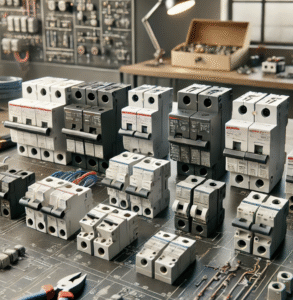
Launching a business around electrical circuit breakers can be a powerful way to enter the broader electrical equipment market—an industry that touches construction, manufacturing, energy, data centers, EV infrastructure, and smart homes. Whether you plan to distribute well-known brands, import private-label product, refurbish heavy-duty units, or design niche assemblies, the demand for reliable protection hardware is expanding alongside electrification. This guide walks you through the market, models, compliance, capital, operations, and go-to-market moves to help you build a business that’s safe, reputable, and profitable. Let’s flip the switch. 🔌
Why Circuit Breakers Are a Smart Business Idea
Circuit breakers aren’t optional—they’re required by codes, engineers, and insurers. That means demand is tied to ongoing construction, maintenance cycles, and upgrades like solar, EV chargers, and data center expansions. Even during slowdowns, replacement and retrofit work continues. Your customer set is broad: electrical contractors, panel builders, OEMs, maintenance teams, property managers, industrial plants, and utilities.
A second advantage is repeatability. Contractors don’t buy just once; they reorder across projects, amperages, poles, and interrupt ratings. A third is defensibility: once you become the “easy button”—right spec, right price, same-day availability—you’re hard to displace. Finally, you can stack margins with value-adds like kitting, labeling, panelboard assembly, testing certificates, and emergency delivery. 🚚
For high-level industry context and trends that influence demand, monitor business news from credible sources like Reuters Business, Bloomberg Markets – Industrials, and Financial Times – Electronics & Semiconductors. Broader macro indicators also matter (construction starts, manufacturing PMIs, commodity pricing), which outlets like CNBC Economy track closely.
Choose Your Business Model
There are four popular entry paths. You can blend them, but pick one to start:
-
Distributor/Reseller
You buy from authorized manufacturers or master distributors and sell to contractors, OEMs, and facilities. The upside is brand trust and predictable specs; the tradeoff is thinner margins and MAP (minimum advertised pricing) constraints. Excellent for building relationships and recurring revenue. -
Private-Label Importer
You source from certified factories (often ISO 9001/14001) and sell under your brand. Margins can be attractive, but you must manage testing, listings, warranty, and supply chain risk. This model requires strong QA and crystal-clear documentation. -
Refurbishment/Remanufacturing
Focus on molded-case breakers (MCCBs), air circuit breakers (ACBs), medium-voltage units, and legacy lines that are scarce but still specified. You’ll need a rigorous process: disassembly, cleaning, contact inspection, calibration, dielectric testing, and labeling. Works well in industrial MRO and utility markets when you can provide test reports. -
Value-Added Assembler
Build breaker-plus solutions: sub-assemblies, custom panelboards, matched accessories (shunt trips, auxiliary contacts), and labeling per project drawings. Contractors will pay for time saved and reduced jobsite risk. 🔧
Licensing, Standards, and Liability
This is not a “fake it till you make it” category. You’re selling safety devices. From day one, design your business to pass audits and keep customers safe:
• Know your codes and standards
Reference UL/CSA/NRTL listings for North America, and IEC standards for global imports. Confirm interrupt ratings (kAIC), voltage class, and temperature ratings. Keep technical data sheets, installation guides, and test reports in a shared repository.
• Understand NEC and NFPA references
Contractors work under the National Electrical Code (NEC) and often adopt NFPA 70E safety practices. Your job is not to provide engineering advice, but you must ship compliant products and documentation.
• Product liability and insurance
Carry general liability and product liability insurance appropriate to your risk profile. If you refurbish or private-label, your policy, procedures, and recordkeeping must be airtight. Maintain lot traceability and serial logs. 🛡️
• Authorized vs gray-market
Unauthorized product can void warranties and create legal exposure. If you’re not an authorized distributor, be transparent and lean into private-label with legitimate certifications—or specialize in compliant refurbishment with test data.
What to Sell: Curate a Product Mix That Wins Jobs
Start with a focused, high-turn assortment:
• Residential/light commercial: miniature circuit breakers (MCBs), arc-fault (AFCI), ground-fault (GFCI), dual-function, load centers, and common accessories.
• Commercial/industrial: molded-case circuit breakers (MCCBs), thermal-magnetic and electronic trip units, frame sizes 100–1600A, shunt trip/UVR kits, auxiliary contacts, and breaker mounting hardware.
• Specialty growth areas: DC-rated breakers for solar strings and battery systems, EV-ready breakers, high-interrupt breakers for data centers, and UL 489B/UL 1077 supplementary protectors for control panels.
• Kitting and labeling: pre-assembled kits by project BOM, engraved labels, and panel schedules. Time saved = margin earned. 🧰
Suppliers and Inventory Strategy
Your inventory is your promise. A lean, data-driven strategy helps you be fast without being overstocked:
• Anchor suppliers
If you distribute, pursue two to three anchor lines (for breadth and support) plus a couple of secondary vendors for gap-filling. If you private-label, audit factories and verify test certificates through recognized labs.
• ABC classification and min/max
Rank SKUs by velocity and margin. Set min/max levels for A-items (fast movers) and acceptable lead times for B/C SKUs. Use reorder points that account for supplier lead time variability and freight delays.
• Safety stock and substitutions
Keep safety stock on A-items and define pre-approved substitutes with matching specs (voltage, kAIC, trip curves). Train your team to check drawings and RFQs before suggesting alternates.
• Dropship and cross-dock
Use master distributors to expand your virtual catalog without carrying all the inventory. Be careful with lead-time promises—contractors plan around your dates.
Pricing and Unit Economics
Breakers can look like small parts, but they hide solid margin if you manage the math:
• Landed cost
Include unit price, freight, duties, brokerage, testing, packaging, and scrap allowance. For refurbishment, add labor, parts, QA tests, and warranty accrual.
• Target margin tiers
Set guardrails: “base,” “project,” and “emergency/hot-shot.” Tie discounts to order size and customer tier. Use project pricing sparingly and always link it to a win (full BOM, not one cherry-picked item).
• Value-add fees
Charge for kitting, custom labels, same-day courier, after-hours pick-up, or testing certificates. These services are time, not just parts—price accordingly. 💵
• Payment terms and cash velocity
Offer net terms only to qualified accounts with credit checks. Otherwise use ACH/credit card and early-pay incentives. Cash speed matters more than top-line in the first 12 months.
Sales Channels and Go-to-Market
You don’t need to boil the ocean. Pick lanes and own them:
• Contractors and panel shops
Start local. Visit job trailers and fab shops, bring sample pieces, spec sheets, and a one-page line card. Promise “quotes in 2 hours, deliveries the same day when possible,” then live up to it.
• OEMs and MRO
Pursue frame agreements for repeat builds and maintenance schedules. Offer consignment bins for common amperages, with monthly reconciliation.
• Digital storefront + inside sales
List your high-velocity SKUs with real availability and clear specs. Add live chat staffed by inside sales who can read drawings and propose alternates. Build trust with fast, accurate responses. 🖥️
• Government and utilities
Register in procurement portals and SAM.gov if you plan to sell to federal/state entities. Understand packaging, labeling, and testing requirements up front.
Operations, Quality Assurance, and After-Sales
Operations is where reputations are made:
• Receiving and QA
Inspect inbound cases for damage, verify catalog numbers, and scan serials. For refurbishment, document every step and save test curves.
• Pick, pack, ship
Use bin locations, barcode scanning, and same-day cutoffs. Package breakables with corner protection, and include installation sheets.
• RMA and warranty
Keep returns painless. Troubleshoot quickly, replace immediately when warranted, and conduct a root-cause review to prevent repeats. A fair RMA policy earns loyalty. 🔁
• Documentation
Archive datasheets, UL/IEC certificates, test reports, and invoices by lot. When an engineer or inspector asks, you can respond in minutes—not days.
Brand, Marketing, and Trust Signals
In an engineering-driven market, credibility wins:
• Publish your quality policy, supplier standards, and testing capability on your website.
• Create quick-hit spec guides (e.g., “How to choose the correct kAIC rating”).
• Showcase case studies with measurable outcomes: “Cut change-order delays by 48 hours with pre-kitted breaker sets.”
• Offer a “2-Hour Quote Pledge” and track your on-time rate publicly.
• Use simple, honest copy and real photos—not stock images. 📸
SEO can help capture “part-number” searches, while outbound calling and LinkedIn outreach open doors with estimators and PMs. Pair both with email cadences that deliver value (spec tips, code reminders, lead-time updates), not spam.
People, Culture, and Safety
Hire for precision and responsiveness. Your buyer cares about two things: spec accuracy and speed. Train everyone—from the warehouse to inside sales—to speak the language of drawings, submittals, and schedules. Make safety non-negotiable: lockout/tagout awareness in the shop, proper lifting, and zero shortcuts with testing equipment. 🦺
Legal, Accounting, and Systems
Form the right entity (LLC/Corp) with counsel, register for sales tax in states where you have nexus, and implement a modern accounting stack. A lightweight ERP or inventory system (with barcode support) will pay for itself by preventing mis-ships and stock-outs. Build a clean chart of accounts, track gross margin by customer and SKU, and review cash conversion weekly.
A Practical 90-Day Launch Plan
Day 0–30
• Validate your model and narrow your SKU list to fast-moving frames and ratings.
• Line up two anchor suppliers (or one factory if private-label) and negotiate MOQs and lead times.
• Set up legal entity, insurance, bank, merchant processing, and accounting stack.
• Build the website: top 50 SKUs, spec sheets, quote form, and clear shipping/returns.
• Rent a small, safe warehouse bay with receiving access and proper shelving.
Day 31–60
• Receive first stock, implement bin locations, and test your pick/pack process.
• Spend time on jobsites and shops; collect RFQs and bid lists.
• Publish a one-page quality policy and an RMA standard.
• Launch “2-Hour Quote Pledge” and measure response times.⏱️
Day 61–90
• Add value-adds: kitting, labels, and emergency courier service pricing.
• Secure two repeat customers on scheduled buys.
• Introduce specialty SKUs (EV/solar DC breakers or high-kAIC lines) based on feedback.
• Review margins, adjust price tiers, and expand A-item safety stock.
Common Pitfalls to Avoid
• Chasing every RFQ: qualify hard. If they only want one low-margin line item, you’ll lose money on time and freight.
• Over-assortment too soon: better to be excellent on 150 SKUs than mediocre on 1,500.
• Ignoring documentation: the one time you can’t produce a certificate or test report could cost you a relationship (or worse).
• Vague warranties: spell out terms and turnaround. Fast, fair RMAs differentiate you.
• Under-insuring: product liability is real. Protect the business and your customers. ⚠️
Conclusion: Flip the Switch on a Durable Business
Starting an electrical circuit breakers business is about more than stocking shelves. It’s about building trust in a category where reliability and compliance are everything. If you choose a clear model, curate a high-turn assortment, run a tight QA process, and deliver quotes and parts faster than anyone else, you’ll become the partner contractors and plant managers call first. Begin focused, execute precisely, and expand where customers pull you. Done right, this is a resilient, repeat-order business with real staying power—one that keeps the lights on for your clients and the cash flowing for you. ⚡💼
Business-news resources to keep an eye on for market context: Reuters Business, Bloomberg Markets – Industrials, Financial Times – Electronics & Semiconductors, and CNBC Economy.