

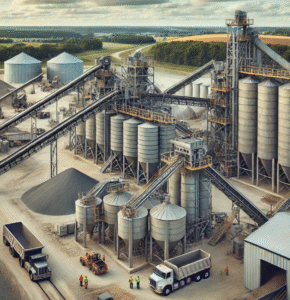
Starting a Bulk Material Handling Equipment Wisconsin business brings together heavy industry, logistics, and smart entrepreneurship. Wisconsin’s mix of agriculture, food processing, paper mills, foundries, manufacturing plants, and distribution hubs creates steady demand for conveyors, hoppers, silos, dust collection systems, bag dump stations, and other bulk handling systems that keep materials moving safely and efficiently. For someone with the right vision, this type of business becomes a long-term asset that serves essential industries across the state.
This guide walks through how to approach the launch of a Bulk Material Handling Equipment Wisconsin business from the ground up: understanding the market, setting up the legal and financial structure, defining your services, building partnerships, managing operations, and marketing your company so that industrial customers see you as a trusted problem-solver rather than just another vendor.
Understanding Bulk Material Handling in Wisconsin’s Economy 💼
Bulk material handling is the backbone of many of Wisconsin’s strongest sectors. Grain elevators, dairy and food processors, aggregate quarries, cement and concrete plants, plastics manufacturers, and paper mills all rely on systems to move large volumes of powders, grains, pellets, and aggregates. When those systems fail, production slows or stops, safety risks increase, and profitability takes a hit.
A Bulk Material Handling Equipment Wisconsin business fits directly into this ecosystem by designing, supplying, installing, and often maintaining equipment such as conveyors, bucket elevators, screw augers, bag dump stations, storage silos, chutes, and dust collection systems. In many cases, plants in Wisconsin work with aging infrastructure and need retrofit solutions that keep them competitive.
At the same time, business leaders across the country pay close attention to financial trends and industrial expansion through major outlets such as Bloomberg’s business news, which regularly spotlight shifts in commodities, infrastructure spending, and manufacturing activity. Bloomberg These macro trends often influence capital investments in material handling systems. Understanding where the broader business cycle is heading helps you time your own investments, hiring, and marketing, as Wisconsin plants expand, consolidate, or modernize.
Laying the Legal and Business Foundation in Wisconsin 🧾
Any serious Bulk Material Handling Equipment Wisconsin company starts with a solid legal and financial foundation. Choosing the right business structure matters from day one. Many owners opt for an LLC or corporation to separate personal and business liability, provide a clear framework for ownership, and present a professional image to banks and industrial clients. Working closely with a Wisconsin-based business attorney and accountant ensures your entity type, operating agreement, and tax structure support your goals.
Creating a thorough business plan is the next step. This document should outline your target industries, service offerings, startup and operating costs, revenue projections, and growth strategy. It serves as the roadmap for your first few years and becomes essential if you seek bank financing, equipment leases, or private investors.
Staying plugged into business and market indicators through reliable sources such as Reuters’ global markets coverage helps you align your plan with real-world trends. Reuters If industrial construction and manufacturing expansion remain strong, you might lean into custom system design and installation. If the climate leans toward cost-cutting and efficiency, you might highlight retrofits, upgrades, and maintenance that deliver quick returns on investment.
Licensing and compliance also require careful attention. You may need contractor licenses depending on the scope of installation work, and you must adhere to OSHA and state safety rules when your team is on industrial sites. In some cases, local permits are required for structural work or foundations for silos and large equipment. Creating a checklist of all federal, state, and local requirements protects your business and demonstrates credibility to clients who cannot afford compliance mistakes.
Designing Your Service Offering and Niche
The phrase “Bulk Material Handling Equipment Wisconsin” can cover a wide range of activities, so defining your niche is essential. Many successful businesses in this space focus on a combination of:
• System design and consulting for new plants or expansions
• Equipment sales and distribution for trusted manufacturers
• Turnkey installation of conveyors, elevators, hoppers, and silos
• Retrofitting and optimization of existing systems
• Preventive maintenance and emergency repair services
Wisconsin’s economy supports multiple niches. Agricultural processors might need gentle handling of grains to prevent damage. Foundries and metalworking plants may require robust, heat-resistant conveyors for scrap and casting sand. Food and dairy operations demand sanitary designs, stainless steel components, and strict compliance with food safety standards.
Your niche definition guides everything from your hiring strategy to your marketing. If you position your firm as the go-to Bulk Material Handling Equipment Wisconsin partner for food and beverage plants, your messaging, case studies, and technical expertise must reflect that specialization. If your focus is heavy industrial and aggregates, your portfolio and team will look different. Both approaches can work when backed by real capability and clear communication.
Building Supplier, Manufacturer, and Client Relationships 🤝
Bulk material handling projects rarely happen in isolation. They require coordination with equipment manufacturers, engineering firms, general contractors, and plant maintenance teams. Building strong relationships in each of these categories becomes a core part of your business model.
First, you need dependable OEM partners. Becoming an authorized distributor or integrator for conveyors, screw feeders, industrial scales, bag dump stations, and dust collection systems gives you access to proven equipment, technical support, and competitive pricing. These partnerships also add credibility when you present solutions to plant managers and project engineers.
Second, networking with engineering and construction firms throughout Wisconsin positions your company as the preferred contractor when their projects involve bulk material handling. Many plant expansions and greenfield projects are driven by consulting engineers who specify equipment and performance criteria. When they know and trust your team, they are more likely to include you in bids and design-build projects.
Third, direct relationships with end users keep your pipeline full. Production managers, maintenance supervisors, and plant engineers want suppliers who understand their specific operations, listen carefully, and deliver practical solutions. Consistent follow-up, honest communication about lead times, and professional on-site behavior create long-term clients who call you first whenever there is a project or problem.
Hiring, Safety Culture, and Operations
Running a Bulk Material Handling Equipment Wisconsin business requires a blend of field talent and office support. On the field side, skilled millwrights, welders, electricians, and riggers are essential. They assemble, modify, and install heavy equipment under tight timelines while maintaining safety standards. On the office side, project managers, estimators, CAD designers, and administrative staff keep the business organized, profitable, and responsive.
Safety cannot be an afterthought. Bulk handling often involves confined spaces, working at heights, heavy lifts, energized equipment, and combustible dust. Establishing a written safety program, investing in regular training, and enforcing compliant procedures reduces incidents and sets your company apart. Clients notice when your crews arrive with proper PPE, documented job hazard analyses, and clear communication.
Operational systems support growth. Job costing, inventory tracking, fleet management, and scheduling software help you control margins and deliver projects on time. Clear workflows for quoting, approvals, purchasing, and invoicing keep your cash flow steady. Over time, the combination of strong field execution and disciplined back-office processes creates a business that can handle larger and more complex projects without chaos.
Staying aware of how business media track industrial trends through outlets like the Wikipedia overview of business news channels keeps you aligned with broader shifts that influence your customers’ capital spending and long-term planning. Wikipedia
Marketing Your Bulk Material Handling Equipment Wisconsin Business 📣
Marketing in this niche is less about flashy ads and more about visibility, credibility, and proof of performance. Strong foundations include a professional website, clear service descriptions, and case studies that highlight real projects. Show the before-and-after impact of your solutions, emphasizing efficiency gains, reduced downtime, improved safety, or increased capacity.
Search engine optimization around phrases such as Bulk Material Handling Equipment Wisconsin helps prospects find you when they research local providers. Optimized service pages, local business listings, and consistent mention of Wisconsin locations (cities like Milwaukee, Green Bay, Appleton, Madison, and Eau Claire) all contribute to your digital footprint.
Offline, your marketing efforts revolve around relationship-building. Participation in state and regional trade shows, manufacturing association events, and industry conferences provides face-to-face connections. Plant tours, lunch-and-learn sessions, and technical presentations position your team as educators and problem-solvers rather than aggressive salespeople.
Reputation management matters as well. Prompt responses, keeping promises, and handling issues with integrity create positive stories that travel through industrial networks. In this space, word-of-mouth recommendations from plant managers and engineers can open more doors than any advertisement. Over time, this reputation becomes your most valuable marketing asset.
Conclusion: Turning Bulk Material Handling into a Long-Term Wisconsin Asset
Launching a Bulk Material Handling Equipment Wisconsin business is not a quick or easy path, but it offers remarkable stability and opportunity. The industries you serve operate at the core of the state’s economy. They always need to move materials safely, efficiently, and reliably. When you build a company that understands their challenges, delivers dependable solutions, and navigates the business landscape with professionalism, you become a strategic partner rather than just another contractor.
With a solid legal and financial foundation, clearly defined services and niche, strong partnerships with manufacturers and engineers, a disciplined safety culture, and steady, credibility-focused marketing, your new venture can grow into a trusted name in Wisconsin industry. Over time, the systems you design and install will move thousands of tons of material, support countless production lines, and help keep the state’s economy in motion, one conveyor and silo at a time.
