
Owning a recreational vehicle represents freedom, adventure, and the ability to travel without giving up the comforts of home. It also represents a substantial financial investment. Whether an RV is used for family vacations, seasonal travel, full-time living, or rental income, its condition has a direct effect on its value, appearance, and long-term operating costs.
Smart RV ownership involves more than maintaining the engine, checking the tires, and preparing the plumbing system for winter. The exterior requires consistent care as well. Sunlight, road grime, rain, insects, tree sap, salt, and environmental pollutants can gradually damage the surface. Regular washing and waxing help preserve that exterior while supporting the owner’s broader financial interests.
The business case for exterior care is straightforward. Preventive maintenance generally costs less than restoration, repairs, or premature replacement. A clean, protected RV is also easier to market, more appealing to renters, and more likely to create a positive first impression. 🚌✨
An RV Is a Significant Financial Asset
An RV is often one of the largest purchases a household makes after buying a home. Depending on its size, age, features, and construction, the purchase price can range from that of a used automobile to that of a luxury residence. Treating such an expensive vehicle casually can lead to unnecessary depreciation and costly cosmetic deterioration.
The U.S. Small Business Administration identifies vehicles and equipment as tangible assets that lose value over time. Although many RVs are purchased for personal enjoyment, the same asset-management principle applies. Owners can rarely prevent depreciation entirely, but they can take reasonable steps to protect condition and slow avoidable value loss.
Routine exterior maintenance should be considered part of the total cost of ownership. Budgeting for cleaning products, protective finishes, inspections, covered storage, and minor repairs creates a more realistic ownership plan. Waiting until the exterior becomes severely oxidized or stained can turn a manageable maintenance task into an expensive restoration project.
Exterior Condition Influences Perceived Value
A buyer, renter, or dealer begins evaluating an RV before stepping inside. Faded siding, black streaks, chalky fiberglass, neglected trim, and stained seals immediately suggest that maintenance may have been postponed. Even when the engine and interior are in good condition, a worn exterior can lower confidence in the entire vehicle.
A clean and glossy finish sends a different message. It suggests that the owner paid attention to details, followed a maintenance schedule, and took pride in the vehicle. This perception can support stronger resale interest and make the RV more competitive in a crowded market.
Industry conditions also affect the importance of presentation. Reuters has reported on changing demand within the American RV market, including the challenges dealerships and manufacturers experienced after the pandemic-era sales surge. When buyers have more choices, condition becomes an especially important differentiator.
A well-maintained RV may not avoid normal depreciation, but it can stand apart from comparable models that show obvious neglect. Good presentation supports better photographs, more attractive listings, and greater buyer confidence.
Regular Washing Removes Harmful Contaminants
An RV exterior is exposed to more than ordinary dust. During travel, it collects insect residue, mud, oil, exhaust particles, bird droppings, pollen, mineral deposits, and road film. Coastal travel can expose the surface to salt, while wooded campsites introduce tree sap and organic debris.
Some contaminants become more difficult to remove when left on the surface. Bird droppings and insect residue may be acidic, while hard-water minerals can leave persistent spots. Dirt can also collect around seals, roof edges, vents, windows, and trim, making it harder to notice early signs of deterioration.
A thorough wash removes this material before it becomes deeply embedded or contributes to staining. Owners should use products compatible with their RV’s fiberglass, gel coat, painted metal, decals, rubber components, and protective finishes. Harsh household cleaners may strip existing protection or damage sensitive materials.
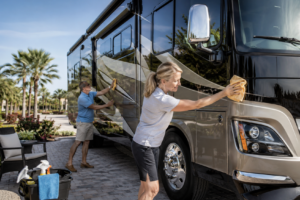
A dedicated RV Wash and Wax process combines cleaning with exterior protection, making it easier to maintain the vehicle’s appearance throughout the travel season. Following manufacturer instructions and working in manageable sections can help produce a more even finish.
Wax Creates a Valuable Protective Barrier
Washing removes dirt, but it does not provide lasting protection by itself. Wax or another suitable exterior protectant creates a sacrificial barrier between the RV’s surface and the surrounding environment. That barrier can reduce the direct effects of ultraviolet exposure, moisture, dirt, and road residue.
Sunlight is one of the most persistent threats to an RV exterior. Ultraviolet radiation can contribute to fading, oxidation, and deterioration of decals and surface materials. RVs stored outdoors are particularly vulnerable because exposure continues even when the vehicle is not being driven.
Wax also helps create a smoother surface. Dirt and water are less likely to cling as firmly, which can make future washing faster and easier. This has practical value for busy owners who want to spend more time traveling and less time correcting neglected exterior damage.
The maintenance principle is similar to the one used by businesses managing working vehicles. The U.S. Chamber of Commerce recommends proactive maintenance schedules to help companies extend vehicle life and control costs. RV owners can apply the same disciplined approach by establishing regular cleaning and protection intervals instead of waiting for visible damage.
Preventive Care Can Reduce Restoration Costs
Oxidation often develops gradually, making it easy to overlook during its early stages. A surface may first lose some gloss, then become dull or chalky. Once oxidation becomes severe, an ordinary wash and wax may no longer be enough. Restoring the finish can require specialized compounds, mechanical polishing, professional labor, or more extensive refinishing.
Preventive maintenance does not eliminate every form of aging, but it can reduce the conditions that accelerate deterioration. Regular cleaning also creates opportunities to inspect the exterior closely. Owners may notice loose trim, cracked seals, damaged caulking, fading decals, roof problems, or small areas of surface damage before they become more serious.
This is particularly important because an RV combines characteristics of a vehicle and a dwelling. As explained in the general history of the recreational vehicle, RVs include living accommodations while remaining designed for travel or temporary use. Their exterior systems must therefore protect both the vehicle structure and the living space inside.
A small failed seal can eventually contribute to water intrusion, interior damage, mold, or structural deterioration. Washing does not repair seals, but a consistent cleaning routine makes careful inspection more likely.
Clean RVs Perform Better in the Rental Market
Some owners use their RVs to generate income when they are not traveling. In that setting, cleanliness becomes part of the customer experience and the business model. Renters compare photographs, reviews, features, prices, and the apparent condition of available vehicles. A clean exterior can help a listing attract attention and establish trust.
Professional-looking photographs are especially important in online rental marketplaces. Sun-faded siding and dark streaks are difficult to hide, while a clean and polished exterior photographs well from multiple angles. Better visual presentation can make the RV appear newer and more carefully managed.
Forbes has covered the income opportunities available through RV rental platforms, while also noting that owners remain responsible for regular maintenance. Exterior care is therefore more than a cosmetic task for income-producing RVs. It is part of protecting the asset that generates the revenue.
A visibly clean vehicle can also influence reviews. Renters often interpret exterior condition as an indication of overall sanitation and management quality. Positive impressions can support repeat bookings, favorable ratings, and referrals.
Appearance Supports Resale and Trade-In Negotiations
Eventually, many owners sell or trade their RVs. Maintenance records, mechanical condition, mileage, age, and market demand all influence value. Exterior appearance adds another powerful factor because it shapes the buyer’s first emotional reaction.
A prospective buyer may be more willing to inspect an RV that looks clean and cared for. Dealers may also find it easier to prepare a well-maintained vehicle for resale. Although washing and waxing cannot erase age or mechanical wear, they can prevent needless cosmetic neglect from weakening the owner’s negotiating position.
Luxury RVs demonstrate the importance of condition particularly clearly. Reuters has reported on the resilience of the high-end RV market, where affluent buyers may continue purchasing premium vehicles even during broader industry slowdowns. Buyers at higher price points generally expect presentation to match the cost.
Owners should keep records of professional detailing, exterior treatments, roof inspections, seal maintenance, and repairs. A documented history provides more credibility than a freshly washed exterior alone. Together, records and appearance tell a consistent story of responsible ownership.
A Maintenance Schedule Makes Exterior Care Manageable
Exterior care is easier when it follows a schedule. The ideal timing depends on climate, storage, travel frequency, surface type, and product instructions. An RV used regularly in harsh sun, coastal air, or winter road conditions may require more frequent attention than one stored indoors.
Owners can create a simple maintenance routine that includes washing after demanding trips, removing insects and bird droppings promptly, inspecting seals during cleaning, and renewing protective treatments as needed. The roof should be cleaned and inspected according to the RV manufacturer’s recommendations.
Professional detailing may be appropriate for large motorhomes, heavily oxidized surfaces, or owners who cannot safely reach elevated areas. The price of professional service should be compared with the time, equipment, physical effort, and risk involved in doing the work without assistance.
This approach reflects sound financial management. The U.S. Chamber of Commerce’s guidance on company vehicle maintenance emphasizes the importance of tracking costs and managing maintenance responsibly. RV owners can benefit from similar recordkeeping, even when the vehicle is used entirely for recreation.
Storage and Washing Work Together
Washing and waxing are most effective when combined with sensible storage practices. Covered storage can reduce exposure to direct sunlight, rain, falling branches, bird droppings, and airborne debris. When enclosed storage is unavailable, an RV cover designed for the vehicle may provide additional protection, provided it is installed and maintained correctly.
The RV should be clean and dry before long-term storage. Covering a dirty surface can trap contaminants against the finish, while trapped moisture may create other problems. Ventilation and periodic inspections remain important during storage.
Parking location also matters. Constant exposure beneath sap-producing trees can create frequent cleaning demands. Areas near sprinklers may lead to mineral spotting, while coastal environments can introduce salt. Choosing the best available storage position reduces the burden placed on wax and other protective products.
Conclusion
RV washing and waxing is not simply about making a vehicle look impressive at the campground. It is a practical form of asset protection that supports appearance, resale value, rental appeal, easier maintenance, and early problem detection.
Smart owners recognize that an RV is both a lifestyle purchase and a financial investment. Regular exterior care helps preserve the enjoyment of ownership while reducing the risk of preventable deterioration. A consistent maintenance schedule, appropriate products, proper storage, and careful inspections can protect the vehicle mile after mile.
The most successful ownership strategy is built on prevention. A clean, protected RV is easier to enjoy, easier to market, and better prepared for the next journey. 🚐💼